70s Toys: Most Popular 1970s Toys by Year
70s Toys: The Analog Toy Box Before the Plastic Empire
The 1970s toy aisle was not just a warm-up act for the 80s. It was the bridge between old-school imagination and the modern kid-culture machine: dolls, die-cast cars, board games, craft kits, backyard toys, model kits, action figures, TV-adjacent playsets, early electronics, and the Christmas catalog pages kids studied like classified documents.
This hub is not just a pile of year links. It is the bigger story of how Gen X play changed during the decade — from shag-carpet imagination and family-room board games to Star Wars figures, electronic beeps, and the first signs that toys were about to become a full-blown media universe.
Before every toy needed a cartoon, a charger, and a cinematic universe.
The 70s toy box was messy in the best way: half brand-name magic, half random plastic chaos, and somehow every piece from every set belonged in the same carpet-floor adventure.
Why 70s Toys Matter
The 70s were the last loose toy box decade.
The magic of 70s toys was that everything could mix. A Hot Wheels track could cut through a dollhouse neighborhood. A board-game token could become a spaceship pilot. A random plastic cowboy could somehow be in charge of a LEGO city, a Fisher-Price village, and a couch-cushion military base. Nobody asked if the brands matched. Nobody cared about lore. The carpet was the universe.
That looseness is what makes the decade different. The 80s would become louder, more branded, more character-driven, and more organized around cartoons. The 70s still felt like a toy box instead of a franchise map.
But the future was already sneaking in.
By the late 70s, the toy aisle was changing fast. Licensed toys were getting bigger. Movie tie-ins were getting hotter. Action figures were becoming more important. Electronic games and Atari-era thinking were pulling play toward screens. The old toy box did not disappear overnight, but the next version of childhood was already loading.
That is why 70s toys are so important for Gen X nostalgia. They explain how we got from open-ended analog play to the 80s explosion of action figures, cartoons, video games, lunchboxes, commercials, and toy lines that felt like entire worlds.
The 70s Toy Decade in Three Acts
1970–1972: The Classic Toy Box
The early 70s still felt connected to the older toy world: dolls, cars, trains, blocks, family games, craft kits, outdoor toys, model kits, and playsets that gave kids just enough structure to start making things up. It was less about collecting every character and more about turning whatever you had into a full afternoon.
1973–1976: The Experiment Years
The middle of the decade got weirder and more colorful. Toy makers leaned into gimmicks, stunts, vehicles, TV commercials, craft toys, science toys, and bigger play patterns. This is where the toy aisle starts feeling more aggressive, more commercial, and more aware that kids were not just playing — they were building wish lists.
1977–1979: The Franchise Door Opens
The late 70s changed the temperature. Star Wars figures helped make small-scale collecting feel massive. Electronic games hinted at the screen future. Atari energy started creeping into the living room. By 1979, the toy aisle was still analog, but it was pointing straight at the 80s.
The Big 70s Toy Aisle Rabbit Holes
 Play Pattern
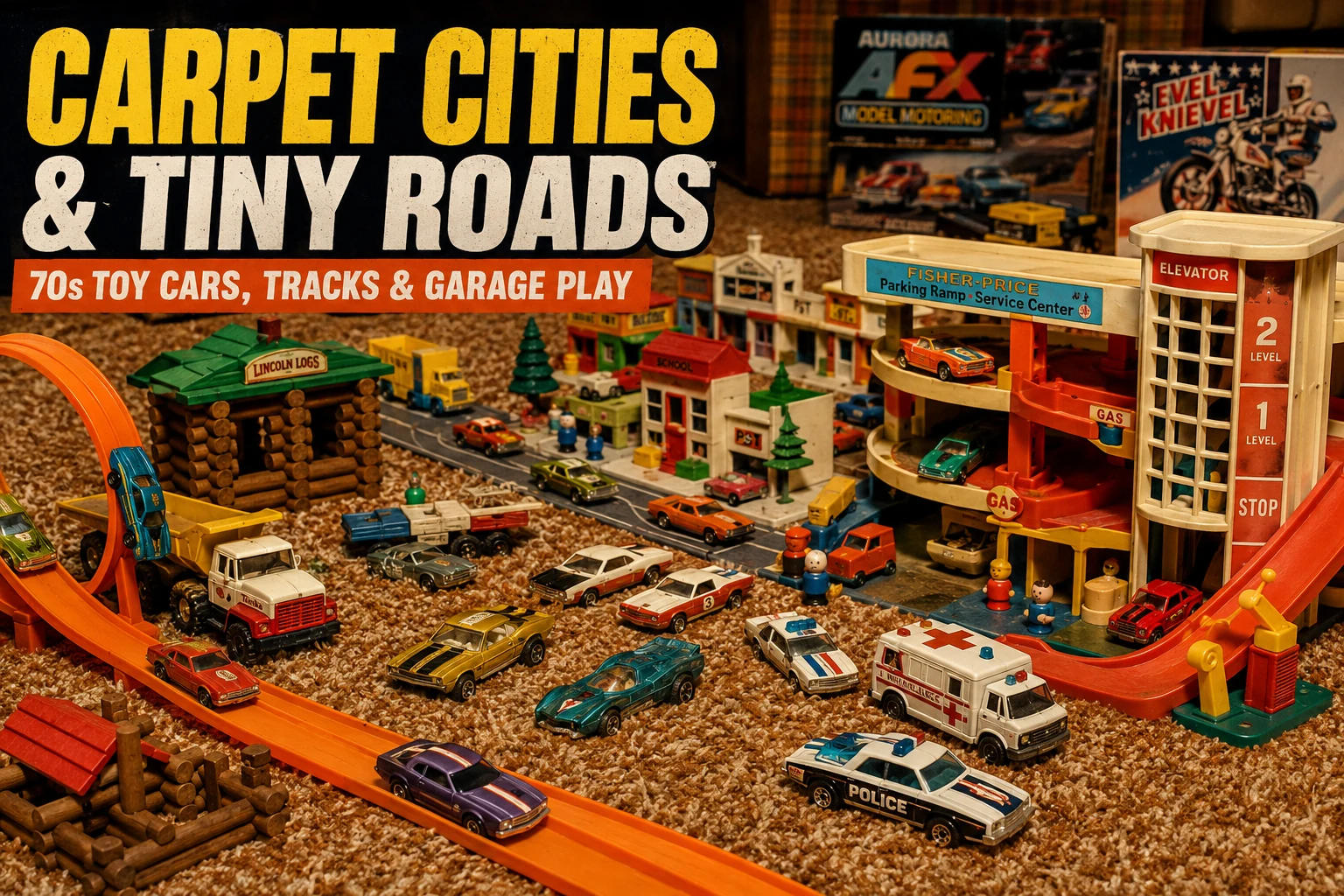
Carpet Cities & Tiny Roads
Hot Wheels, Matchbox cars, Tonka trucks, Fisher-Price garages, orange track, LEGO buildings, slot cars, ramps, and the living-room floor as one giant 70s road map.
Build the city →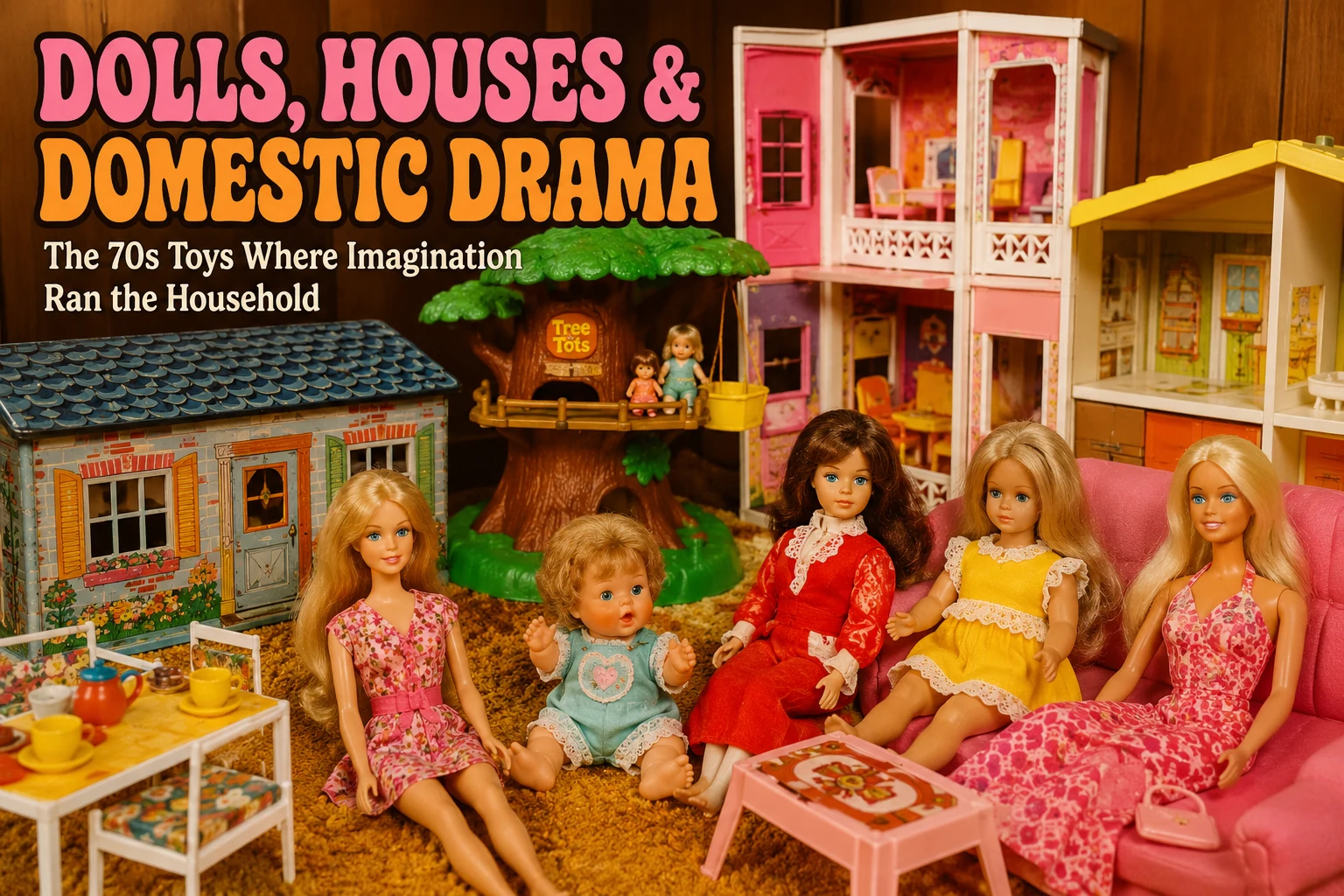 Play Pattern
Dolls, Houses & Domestic Drama
Barbie, Dawn dolls, Crissy, Baby Alive, Fisher-Price houses, Tree Tots, tiny furniture, plastic kitchens, and miniature soap opera chaos.
Open the dollhouse →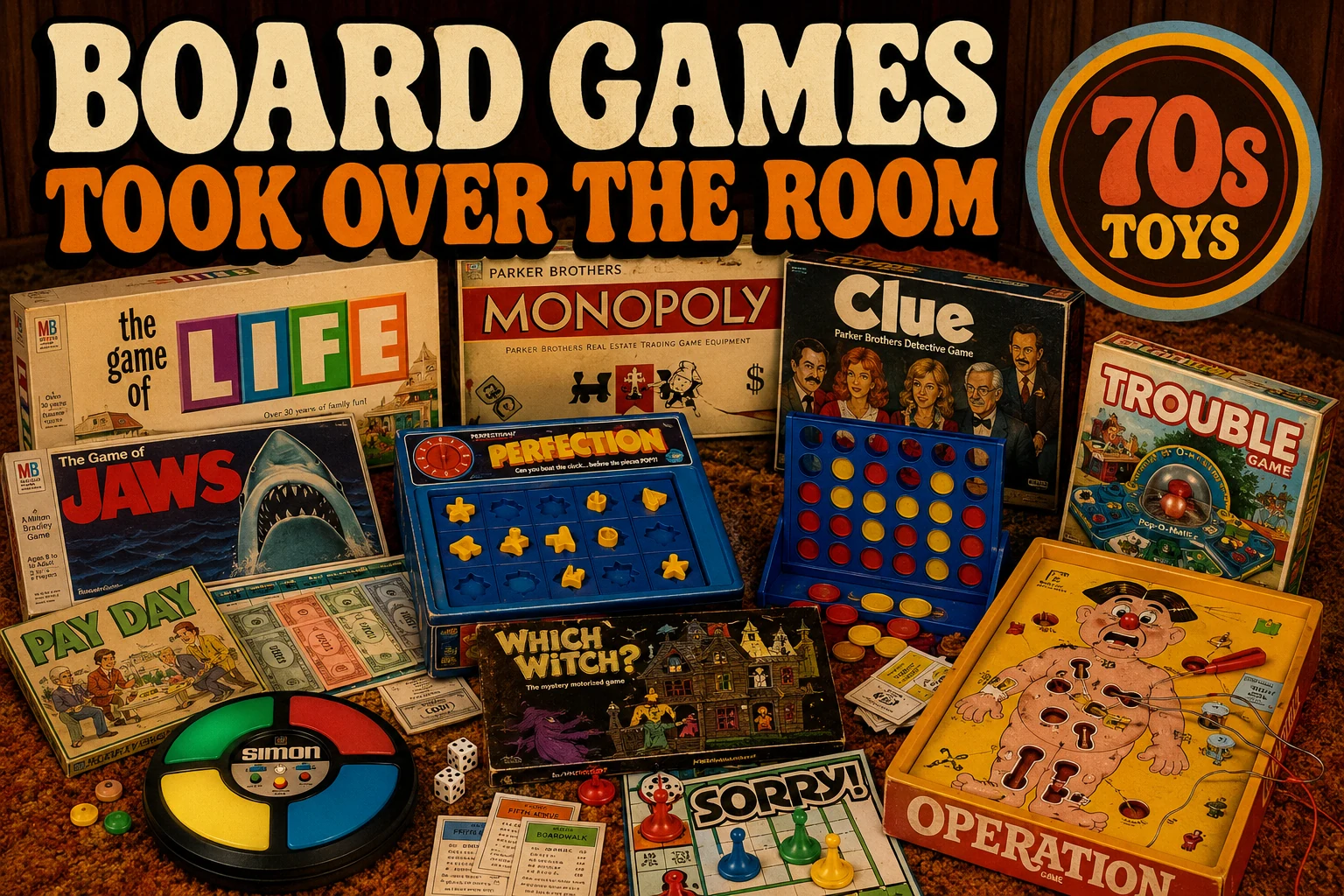 Play Pattern
Board Games Took Over the Room
Monopoly, Clue, Life, Trouble, Sorry!, Operation, Which Witch?, Perfection, Connect Four, Pay Day, Simon, Stop Thief, and family-room chaos.
Roll the dice →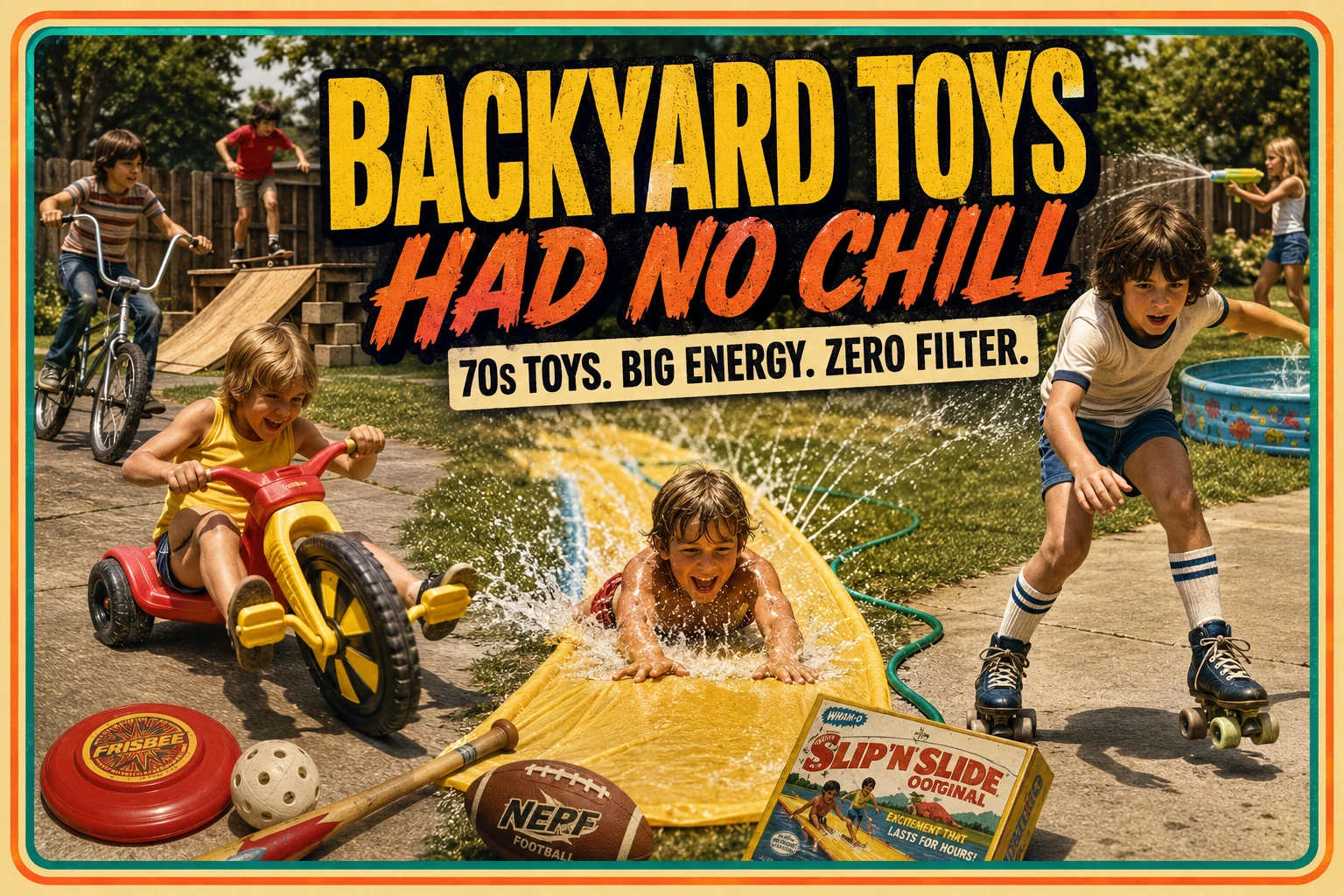 Play Pattern
Backyard Toys Had No Chill
Big Wheels, Slip ’N Slide, Nerf footballs, Frisbees, bikes, skates, ramps, water toys, lawn games, and the dangerous confidence of “watch this.”
Go outside →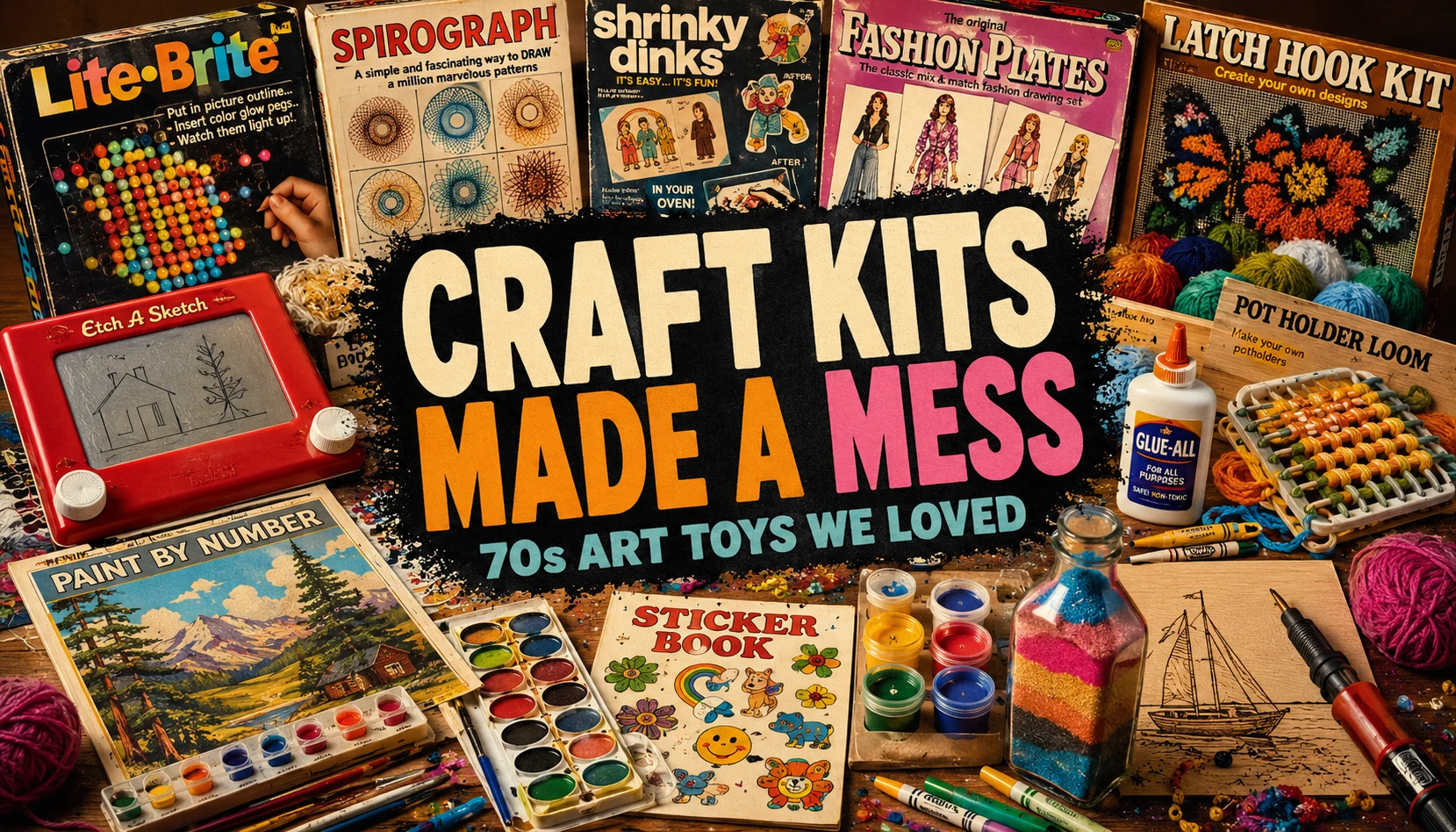 Play Pattern
Craft Kits Made a Mess
Lite-Brite, Spirograph, Shrinky Dinks, Fashion Plates, latch hooks, potholder looms, paint sets, stickers, sand art, wood burning, and kitchen-table chaos.
Make a mess →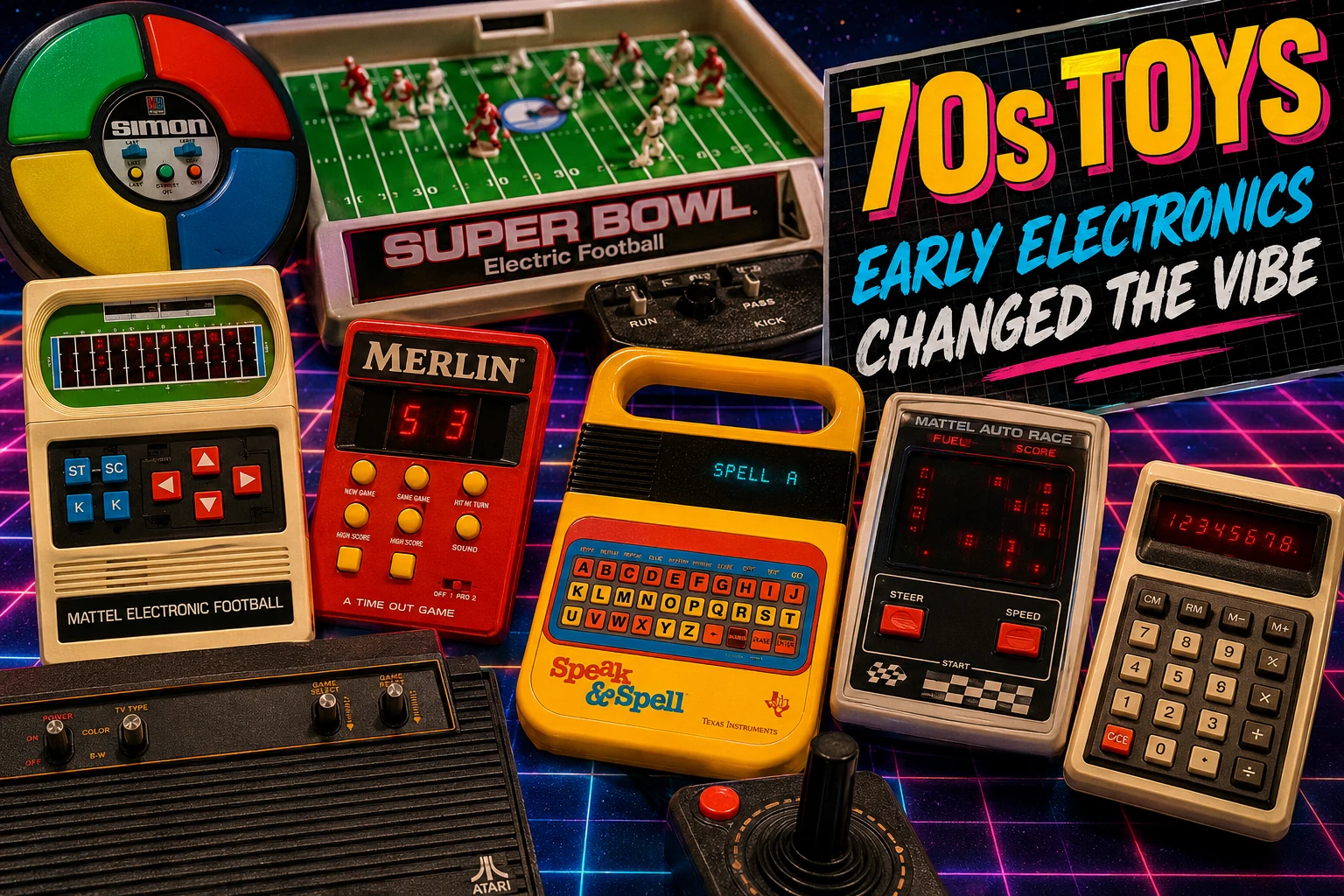 Play Pattern
Early Electronics Changed the Vibe
Electric football, Mattel handhelds, Auto Race, Simon, Merlin, Speak & Spell, Big Trak, Atari, and the beeps that dragged play toward the screen.
Press start →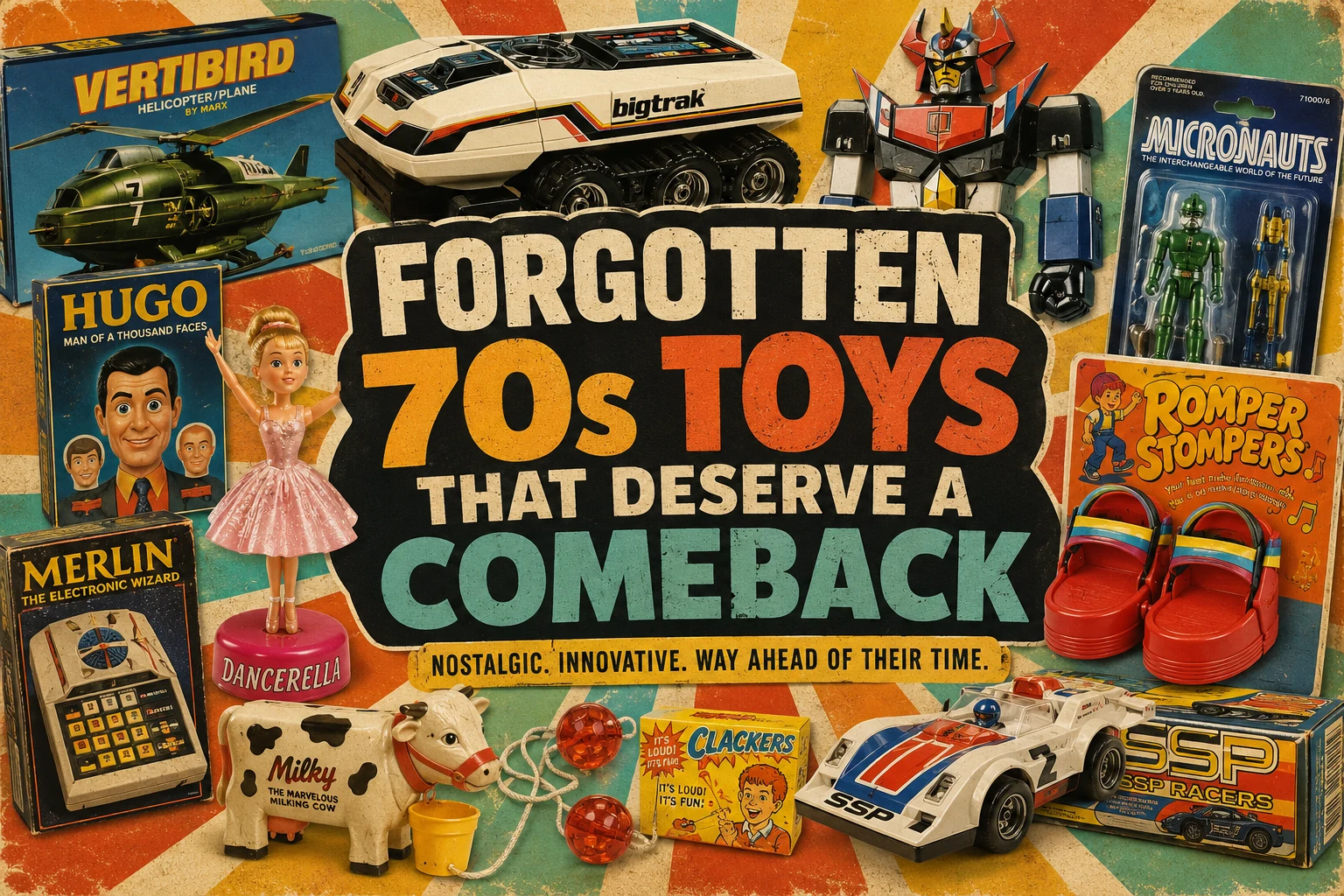 Deep Dive
Forgotten 70s Toys That Deserve a Comeback
VertiBird, SSP Racers, Micronauts, Shogun Warriors, Hugo, Dancerella, Milky, Merlin, Quiz Wiz, Big Trak, and the weird toys that deserve another shot.
Bring them back → Video Archive
70s Toy Commercials & Forgotten Toy Videos
Watch Big Trak, Merlin, Quiz Wiz, SSP Racers, Micronauts, Shogun Warriors, Mego, Girder & Panel, Colorforms, Fashion Plates, and more.
Watch the commercials →Christmas Catalog Culture
You cannot talk about 70s toys without talking about catalogs. For a lot of kids, the toy aisle was not just something you visited in a store. It arrived at home in the form of giant catalog pages filled with impossible choices. Kids circled things, folded corners, argued rankings, revised lists, and treated the toy section like a sacred annual document.
That catalog experience mattered because it made toys feel bigger than the shelf. A toy was not just a toy — it was a promise. It was the thing you imagined owning for weeks before it ever showed up. It was the box under the tree you hoped had the right size, the right rattle, the right weight. Half the toy lived in your imagination before you ever touched it.
That is part of what makes the 70s toy era so sticky. The anticipation was slower. The wish list had time to ferment. Kids were not being hit with endless online recommendations and same-day shipping. They had a catalog, a pencil, and the dangerous belief that parents might actually buy the big set.
Commercials, TV, and the Toy Sell
Before cartoons became toy catalogs.
The 70s had toy commercials, licensed characters, and TV tie-ins, but it was not yet the fully weaponized Saturday morning system the 80s perfected. That difference matters. A lot of 70s toys still had to sell the play pattern first: what it did, how it moved, what lit up, what launched, what transformed, what mess it made, or what fantasy it unlocked.
The pitch was often simple and direct: here is the thing, here is the action, here is a kid looking dramatically happier than you, and here is the jingle that will live rent-free in your brain until retirement.
The commercial became part of the toy.
A 70s toy commercial could make a small object feel enormous. The camera angles were heroic. The hands were suspiciously coordinated. The living-room floor became a battlefield, racetrack, fashion studio, science lab, or spaceport. Reality rarely matched the commercial, but that was not the point. The commercial gave the toy a mythology.
That mythology is why even forgotten toys still have a strange emotional pull. You do not just remember the object. You remember wanting it.
Watch the 70s Toy Commercial Energy
The pitch, the jingle, the impossible promise, and the reason half these toys looked ten times more dramatic on TV than they ever did on the living-room floor.
Start With These 70s Toy Years
Top Toys of 1970
The clean starting point for the decade: classic shelf staples, analog play, dolls, games, vehicles, and the toy-room energy before everything got louder.
Read 1970 toys → Early 70s Shelf PowerTop Toys of 1972
A strong snapshot of the early decade: Barbie energy, Hot Wheels heat, family-room games, toy-store basics, and analog childhood before screens moved in.
Read 1972 toys → The Big ShiftTop Toys of 1977
The year the toy aisle starts feeling different. Movie heat, action figures, franchise thinking, and the early tremor before the 80s toyquake.
Read 1977 toys → Late 70s MomentumTop Toys of 1978
Star Wars momentum, classic brands, board games, electronics creeping in, and Christmas-list chaos that already feels halfway to the 80s.
Read 1978 toys → End of the DecadeTop Toys of 1979
The handoff year: Atari-era energy, Star Wars still looming, traditional toys still hanging on, and the next decade waiting in the hallway with a boombox.
Read 1979 toys → Forgotten FavoritesForgotten 70s Toys That Deserve a Comeback
VertiBird, Big Trak, Quiz Wiz, Merlin, Micronauts, SSP Racers, Dancerella, Hugo, Clackers, Lemon Twist, and other half-buried 70s toy aisle legends.
Revisit the forgotten toys → Video Archive70s Toy Commercials & Forgotten Toy Videos
Watch the vintage toy-ad energy that sold Big Trak, Merlin, Quiz Wiz, SSP Racers, Micronauts, Shogun Warriors, Fashion Plates, Colorforms, and more.
Watch the videos → Next StopThen the 80s Took Over
Once you finish the 70s, jump into the decade where toys got louder, brighter, more commercial, and absolutely allergic to subtlety.
Visit 80s Toys →What This Hub Actually Covers
The toy aisle, not just the toys.
The yearly countdowns are the backbone, but this hub is really about the full ecosystem around 70s toys: how kids discovered them, how commercials made them feel bigger than they were, how catalogs turned them into annual obsessions, and how the toy box changed from loose analog play into something more branded, collectible, and entertainment-driven.
That is the piece that matters. A single toy can be nostalgic, but the whole aisle tells you what childhood felt like. The boxes, the commercials, the wish lists, the store shelves, the living-room floor, the backyard, the birthday party, the hand-me-downs — that is the real 70s toy story.
The four big lanes of 70s play.
This hub keeps returning to four core lanes: classic toys that carried over from earlier childhoods, creative toys that let kids build or make something, action and adventure toys that pointed toward the franchise era, and electronic toys that hinted at the screen-heavy future. The best 70s toys usually fall somewhere between those lanes.
That mix is what makes the decade so useful. It was not one clean toy era. It was dolls next to die-cast cars, board games next to model kits, backyard toys next to electronic beeps, and old-school imagination sitting right beside the first sparks of modern kid marketing.
70s Toys vs. 80s Toys
The easiest way to understand 70s toys is to compare them with what came next. The 80s toy aisle was louder, brighter, more character-driven, and much more tied to cartoons, movies, and massive branded universes. The 70s had licensing and commercials too, but the decade still left more room for loose play. A toy did not always arrive with a backstory, a villain, a vehicle wave, a lunchbox, and a theme song.
That difference is why 70s toys feel warmer and stranger. They were often simpler, but not necessarily less creative. A lot of them asked kids to bring more imagination to the table. They did not always tell you exactly what world you were entering. They just gave you pieces, motion, color, texture, and a reason to sit on the floor for three hours.
The 80s perfected the toy universe. The 70s helped build the runway.
70s Toys FAQ
What were the most popular toys of the 70s?
Popular 70s toys included Barbie, Hot Wheels, LEGO, Lite-Brite, Nerf toys, board games, dolls, model kits, Evel Knievel stunt toys, action figures, Star Wars figures, electronic games, outdoor toys, and classic family-room toys that filled Christmas lists before the 80s cartoon-toy machine took over.
Why did 70s toys feel different from 80s toys?
70s toys were generally more analog, open-ended, and less dominated by cartoon-driven toy lines. The 80s pushed toys harder through character universes, TV shows, action brands, and giant franchise marketing. The 70s were the bridge between classic toy boxes and modern media-driven toy culture.
What changed in the late 70s toy aisle?
Star Wars action figures, electronic games, and Atari-era entertainment helped change what toys could be. By 1977 through 1979, the aisle was already moving toward franchises, screens, collectibles, and the louder 80s toy economy.
Where can I find forgotten 70s toys?
Start with Forgotten 70s Toys That Deserve a Comeback for overlooked toy aisle legends like VertiBird, SSP Racers, Hot Wheels Sizzlers, Micronauts, Shogun Warriors, Dancerella, Hugo, Merlin, Quiz Wiz, and Big Trak.
Where can I watch 70s toy commercials?
Watch the full 70s Toy Commercials & Forgotten Toy Videos archive for Big Trak, Merlin, Quiz Wiz, SSP Racers, Micronauts, Shogun Warriors, Mego, Girder & Panel, Colorforms, Fashion Plates, Lemon Twist, Inchworm, Milky, and more.
Where should I start on the 70s Toys hub?
Start with Top Toys of 1970 for the beginning of the decade, Top Toys of 1977 for the franchise shift, or Top Toys of 1979 for the handoff into the 80s. Then use the year-by-year links, the forgotten 70s toys deep dive, the 70s toy commercials video archive, and the bigger toy aisle rabbit holes to move through the full decade.
Get the Weekly Gen X Drop
Fresh nostalgia, savage takes, toy rewinds, countdowns, and exactly the kind of plastic-fueled memory damage you signed up for.